
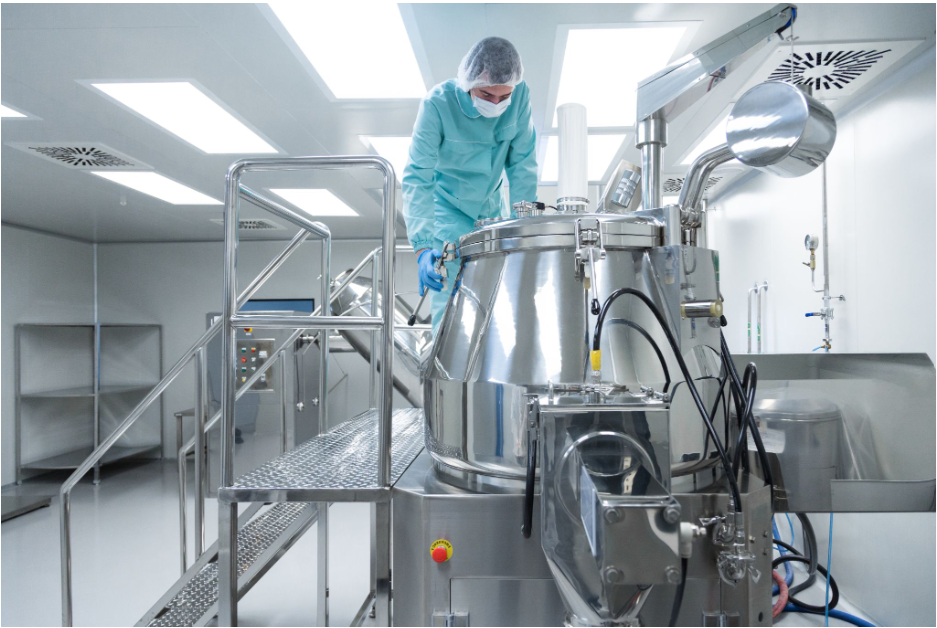
Exosome purification is a critical step in the development and manufacturing of high-quality extracellular vesicle (EV) products. Because biological starting materials contain proteins, nucleic acids, lipoproteins, cell debris, and other extracellular components, an effective purification strategy is essential for obtaining an enriched exosome preparation while preserving particle integrity and biological characteristics.
At VESCO Science, understanding the principles behind purification technologies such as Tangential Flow Filtration (TFF), Size-Exclusion Chromatography (SEC), and Ultrafiltration is fundamental to developing consistent and research-grade extracellular vesicle preparations.
Why Is Exosome Purification Important?
Exosomes are nanoscale extracellular vesicles, generally within the approximately 30–150 nm range, released by cells and surrounded by a lipid bilayer. During isolation, exosomes are accompanied by numerous other biological components.
The purification process therefore aims to:
- Enrich extracellular vesicles from the starting material
- Reduce soluble protein and unwanted contaminants
- Remove cellular debris and larger particles
- Maintain vesicle structure and integrity
- Improve batch-to-batch consistency
- Produce material suitable for downstream characterization and research
Importantly, no single purification method is universally optimal. The appropriate approach depends on the source material, desired purity, processing scale, recovery requirements, and intended application.
1. Ultrafiltration: Membrane-Based Separation
Ultrafiltration (UF) uses a semipermeable membrane to separate components according to their size and molecular properties. Smaller molecules and soluble components can pass through the membrane, while larger particles such as extracellular vesicles are retained.
A major advantage of ultrafiltration is its relative simplicity and scalability. It can be incorporated into workflows where concentration of extracellular vesicle preparations is required.
However, conventional ultrafiltration can expose vesicles to membrane interactions and concentration-related stresses. Therefore, membrane selection, pressure, processing conditions, and recovery optimization are important for maintaining product quality.
2. Tangential Flow Filtration (TFF): Scalable Processing
Tangential Flow Filtration (TFF) is a membrane-based technology widely used for scalable bioprocessing.
Unlike conventional dead-end filtration, where the sample flows directly toward the membrane, TFF directs the feed parallel to the membrane surface. A portion of the fluid passes through the membrane as permeate, while larger particles are retained in the retentate.
This configuration can provide several advantages:
- Efficient concentration of extracellular vesicles
- Diafiltration for buffer exchange
- Reduced membrane fouling compared with conventional filtration
- Continuous processing capability
- Better suitability for scale-up
TFF can therefore play an important role in moving from laboratory-scale EV isolation toward controlled and scalable manufacturing workflows.
3. Size-Exclusion Chromatography (SEC): Separation by Size
Size-Exclusion Chromatography (SEC) separates components according to their hydrodynamic size using a porous stationary phase.
When an extracellular vesicle-containing sample passes through an SEC column, smaller molecules can enter the pores of the stationary phase and therefore take a longer pathway through the column. Larger particles, including extracellular vesicles, are preferentially excluded from these pores and can elute earlier.
SEC is particularly useful for reducing soluble protein and other small molecular contaminants while operating under relatively gentle conditions.
One limitation is that SEC typically provides lower concentration capacity than membrane-based concentration techniques. For this reason, SEC may be incorporated as part of a multi-step purification workflow rather than used as the only processing step.
TFF vs. SEC vs. Ultrafiltration
| Method | Primary Principle | Major Advantage | Key Consideration |
|---|---|---|---|
| Ultrafiltration | Membrane-based size separation | Simple concentration | Membrane interaction and fouling |
| TFF | Tangential membrane filtration | Scalable concentration & buffer exchange | Requires process optimization |
| SEC | Size-based chromatography | Effective removal of soluble contaminants | Limited loading capacity |
In advanced workflows, these technologies can be complementary rather than competing. For example, membrane-based processing may be used for concentration and buffer exchange, followed by chromatographic purification to improve separation from soluble contaminants.
Purification Is Only One Part of Exosome Quality
A purified preparation should not be evaluated solely by its appearance or particle concentration. Comprehensive characterization is required to understand the identity, purity, size distribution, and overall quality of an extracellular vesicle preparation.
Common analytical approaches include:
- Nanoparticle Tracking Analysis (NTA) for particle concentration and size distribution
- Transmission Electron Microscopy (TEM) or cryo-TEM for morphological assessment
- Protein and contaminant assessment
- Appropriate sterility and safety testing depending on the intended application
These complementary analyses help establish whether a purification process consistently produces the intended extracellular vesicle population.
From Purification to Reproducible Manufacturing
The objective of modern exosome processing is not simply to isolate more particles, but to establish a controlled process that delivers consistent and well-characterized extracellular vesicle preparations.
The integration of ultrafiltration, TFF, SEC, and analytical characterization provides a framework for developing scalable purification strategies. Process parameters such as membrane characteristics, flow conditions, concentration factors, buffer composition, and recovery should be carefully optimized and documented.
For a research-focused organization such as VESCO Science, purification technology forms an important component of a broader quality strategy—connecting upstream cell culture, downstream processing, analytical characterization, and batch consistency into a controlled manufacturing workflow.
Editorial article prepared for this preview. Product-specific and batch-specific data are issued with formal documentation and are not attached on this page.
이 주제에 대해 논의하십시오