
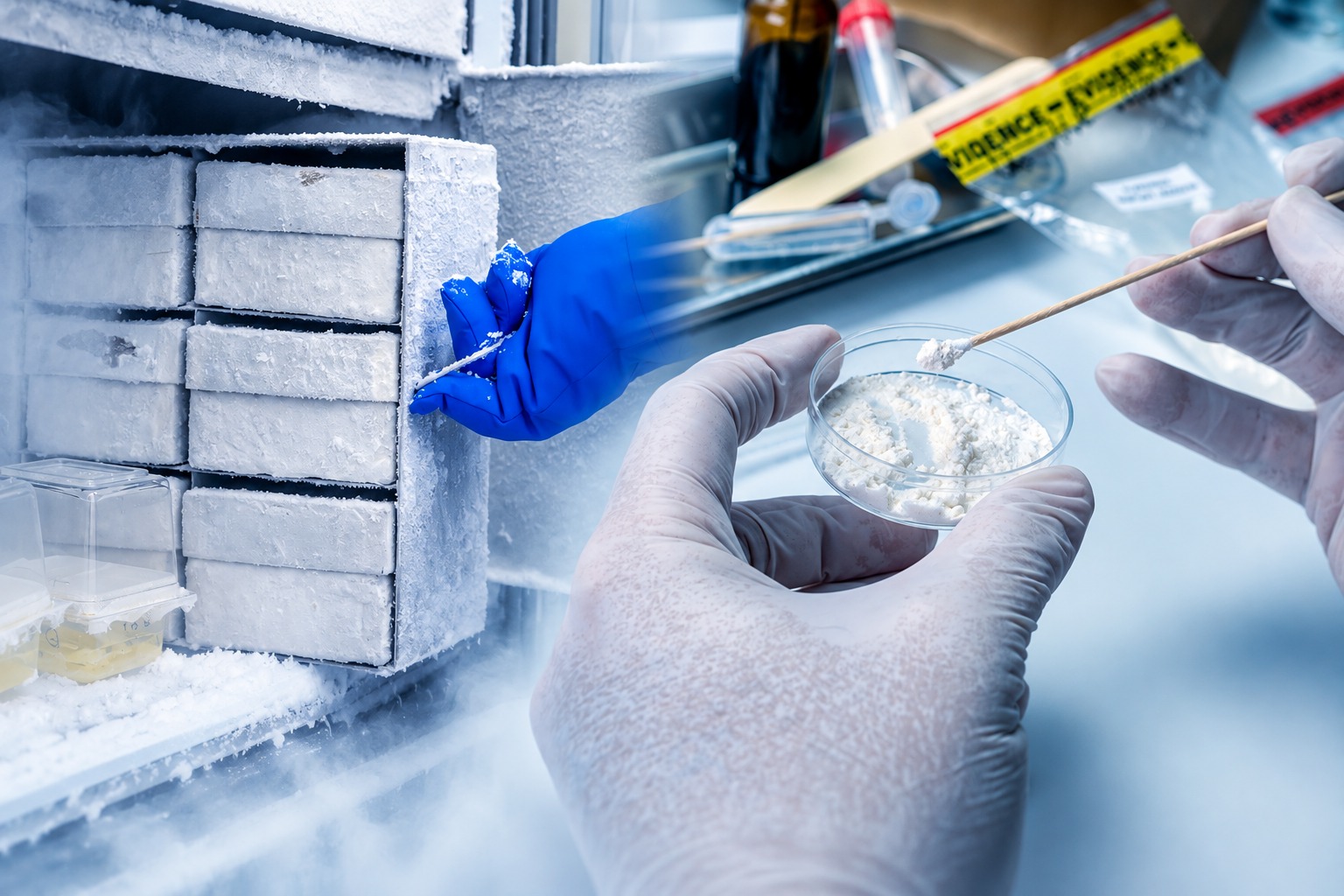
Exosomes are nanoscale extracellular vesicles that participate in intercellular communication by carrying a complex biological cargo, including proteins, lipids, nucleic acids, and signaling molecules. As interest in exosome-based research and advanced biological applications continues to grow, the way exosomes are formulated and stored has become an important consideration.
Two commonly encountered formats are lyophilized (freeze-dried) and frozen exosomes. While both approaches are designed to maintain exosome quality during storage, they differ significantly in processing, handling, transportation, and reconstitution requirements.
Understanding these differences helps researchers, laboratories, and biotechnology professionals select the most appropriate format for their specific workflow.
What Are Lyophilized Exosomes?
Lyophilization, commonly known as freeze-drying, is a controlled dehydration process in which a biological preparation is frozen and then subjected to reduced pressure to remove water through sublimation.
For exosome preparations, the process generally involves:
- Freezing → Primary Drying → Secondary Drying → Sealed Dry Storage
The objective is to reduce water activity while maintaining important characteristics of the extracellular vesicle preparation.
A properly developed lyophilization process may provide advantages in storage convenience, transportation, and formulation stability, particularly when a product is designed for handling without continuous frozen conditions.
However, lyophilization is not simply a matter of removing water. Exosomes are structurally delicate biological nanoparticles, and the formulation must be carefully optimized. Parameters such as freezing rate, drying conditions, excipients, residual moisture, and reconstitution conditions can influence particle recovery and biological properties.
What Are Frozen Exosomes?
Frozen exosome preparations are maintained in a hydrated state under controlled low-temperature conditions. Depending on the formulation and manufacturer, storage may require temperatures such as −20°C or lower.
The primary advantage of the frozen format is that the exosomes remain in a liquid formulation without undergoing the dehydration and reconstitution steps associated with lyophilization.
For research applications, maintaining a controlled frozen environment can help preserve the physical and biochemical characteristics of an exosome preparation. Nevertheless, temperature fluctuations and repeated freeze–thaw cycles should be minimized, as they can potentially affect vesicle integrity, aggregation, particle recovery, and cargo stability.
Therefore, cold-chain management is an important part of frozen exosome handling.
Lyophilized vs. Frozen Exosomes: Key Differences
| Feature | Lyophilized Exosomes | Frozen Exosomes |
|---|---|---|
| Physical state | Dry powder / dehydrated preparation | Liquid suspension |
| Water content | Significantly reduced | Maintained |
| Storage | Designed for dry, controlled storage depending on formulation | Requires controlled frozen conditions |
| Transportation | Can simplify logistics when validated for the specified conditions | Requires appropriate cold-chain management |
| Before use | Requires reconstitution | Generally ready after controlled thawing |
| Freeze–thaw concern | Reconstitution-related stress must be controlled | Repeated freeze–thaw cycles should be avoided |
| Formulation sensitivity | Highly dependent on cryo/lyoprotectants and drying process | Dependent on freezing temperature and formulation |
| Quality assessment | Should include post-reconstitution characterization | Should include characterization after storage/thawing |
The most important point is that format alone does not determine exosome quality. A high-quality exosome preparation requires appropriate manufacturing controls and analytical characterization regardless of whether it is supplied frozen or lyophilized.
Does Lyophilization Make Exosomes More Stable?
Not automatically.
Lyophilization can offer significant logistical advantages, but the process itself introduces physical stresses that may affect extracellular vesicles. Protective excipients may be incorporated to reduce damage during freezing and drying.
A scientifically validated lyophilized formulation should therefore be evaluated after reconstitution for parameters such as:
- Particle concentration and recovery
- Particle-size distribution
- Vesicle morphology
- Aggregation
- Relevant exosome-associated markers
- Protein and cargo integrity
- Functional or biological activity, where applicable
Similarly, frozen preparations should be evaluated following storage and thawing to confirm that the intended quality attributes remain within specification.
Which Format Is Better?
There is no universal winner between lyophilized and frozen exosomes. The appropriate format depends on the intended application, formulation, validated storage conditions, transportation requirements, and quality specifications.
Lyophilized format may be advantageous when:
- Simplified storage logistics are important
- Transportation without continuous deep-freeze conditions is desired
- A dry, reconstitutable formulation fits the workflow
- The formulation has been specifically validated for long-term stability
Frozen format may be advantageous when:
- A ready-to-use liquid preparation is preferred
- Maintaining the preparation in a hydrated state is desirable
- Established cold-chain infrastructure is available
- The product has validated frozen-storage stability
Quality Matters More Than Format
For researchers and biotechnology professionals, the critical question should not simply be “lyophilized or frozen?” but rather:
How well does the manufacturing and storage process preserve the defined quality attributes of the exosome preparation?
Reliable exosome products should be supported by appropriate analytical characterization, controlled manufacturing processes, and clearly defined storage and handling conditions.
At Vesco Science, the development of extracellular vesicle technologies requires attention to the relationship between manufacturing process, formulation, storage conditions, and measurable quality attributes. This approach helps ensure that exosome preparations are characterized scientifically rather than evaluated solely by their physical format.
Editorial article prepared for this preview. Product-specific and batch-specific data are issued with formal documentation and are not attached on this page.
이 주제에 대해 논의하십시오