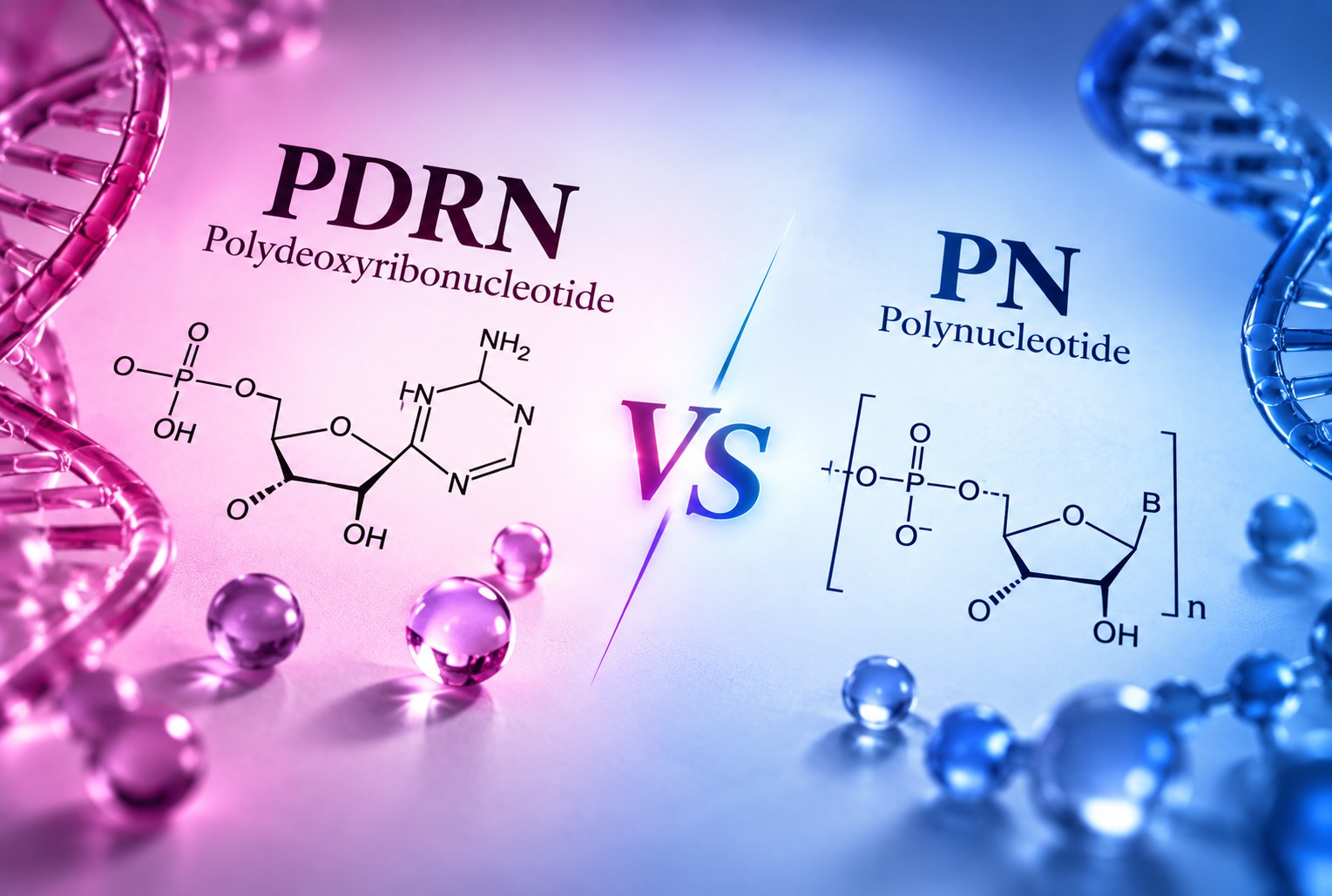
PDRN and PN are two important nucleic-acid-based biomaterials increasingly used in regenerative aesthetics, dermatology, and tissue-repair research.
What Is PDRN? — Polydeoxyribonucleotide: mixture of DNA fragments. Biological activity investigated in tissue repair, cellular signaling, angiogenesis. Mechanisms: adenosine A2A receptor pathway and nucleotide salvage pathway.
What Is PN? — Polynucleotide: purified polymeric DNA chains with higher molecular weight. Provides biocompatibility, water-retention, viscoelastic behavior.
Key Differences — PDRN: shorter fragments, lower MW, bioactive signaling. PN: longer chains, higher MW, polymeric and viscoelastic.
Molecular Weight Matters — Shorter vs. longer chains have different diffusion, degradation, and biological profiles.
Different Mechanistic Profiles — PDRN: tissue repair pathways. PN: viscoelastic and tissue-supporting properties.
Applications in Regenerative Aesthetics — Skin hydration, tissue repair, regenerative processes, skin texture, post-procedural recovery.
Evaluation Parameters — Molecular-weight distribution, purity, source, concentration, sterility, physicochemical characterization.
Editorial article prepared for this preview. Product-specific and batch-specific data are issued with formal documentation and are not attached on this page.
이 주제에 대해 논의하십시오